



Ryan, it’s Wednesday. WTF are you doing in my inbox?
Well, my friend, the winds they are a changing. Outpost is now coming to you twice weekly.
Wednesday for a little midweek how ya doin’, and Sunday newsletter business as usual.
I look at it this way: if someone knocked on your door every day slinging all hell, you’d be pretty annoyed. But if that same person knocked on your door bringing relevant information in fashion, travel, food, hell, maybe even something to impress the ole lady, you’d meet that nuisance with open arms.
So here we are. John or I, and oftentimes both of us, will be knocking every Wednesday. Bringing ya the goods. Hell, writes every damn day. That worked pretty well for her.
Male Guide to Surviving Winter
Last weekend the clocks fell back an hour, and the sun set at 4:52. Winter is here.
In New York a vibrant social scene built around outdoor dining, sports, and weekends getting away all start to freeze over. For a young, active gent, this can be particularly hard.
Here’s a few things you can do to kick this winter’s ass.
1. Join a gym
Literally any gym. It doesn’t have to be an Equinox. I used to hit the Chelsea Rec Center. $99 a year, you read that correctly… they have ‘em all over the city. I wouldn’t suggest the pool, but go throw some iron around, ya Sally.
2. Sauna
3. Candles
I asked my good friend in Berlin how they survive such a hard winter. She replied: sauna and candles.
Similar to New York, very few, if any, Berlin flats have fireplaces. She explained that outside of the scent, a bit of flame brings so much good energy to a room.
Love this. as you know we’re team Ranger Station

4. Cook
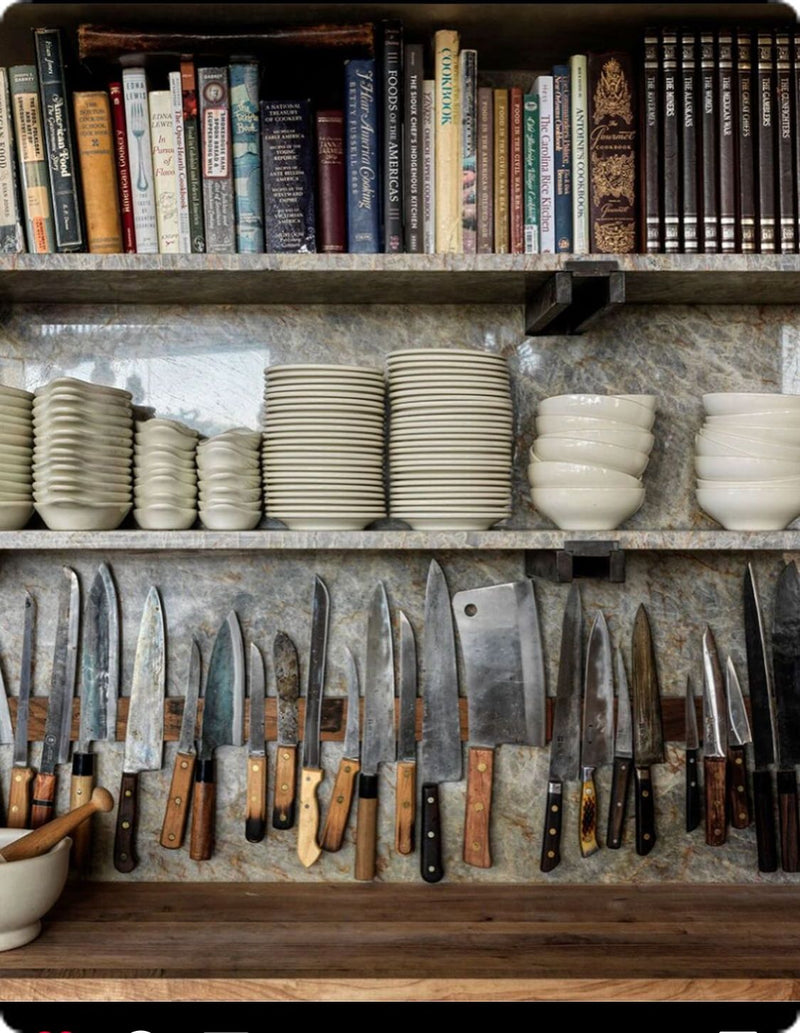
If you are in a bad mood, or feel out of it, cook. But don’t just cook, really get into it. Take your time, get lost in the knife work, phone away, completely zone out. Make a good roast or a hearty soup. Something that needs a long braising to really smell up the apartment.
5. Winter Sport
Nordic countries welcome winter, perhaps because there are just as many sports to be had, if not more. Cross-country skiing, downhill skiing, pond hockey, duck hunting.

6. Call a friend
Do it right now.
“Hey man, been a minute. Wanted to say what’s up.”
7. Buy that Piece of Furniture
I bought this couch as a gift to myself for moving into my first apartment and choosing a studio over a one-bedroom. The economic option that has paid dividends, as I now work for myself and could never afford a one-bedroom or this couch otherwise. But it brings me so much joy every time I sit down. Spend those hard-earned shillings on something that will bring you joy every day this winter.

8. Watch Every Movie
…in a Specific Series or Actor’s Filmography
I’ve recently been on a Daniel Day kick. There Will Be Blood is the best movie ever. We’re not here to debate it.
But I hadn’t seen so many of his other films, both the bangers like The Crucible and the weird indie ones like The Unbearable Lightness of Being (this one is strange).
But we press on. Pick an actor or a series (not a show) and cover ‘em all.
9. Welcome the Slowdown
Winter brings a slowness. This isn’t necessarily a bad thing. Summers are filled with events, travel, and constant stimulus. Winter is a chance to reset.
Log off at 4:30, toss on a movie, cook a big bowl of something, smoke that joint. Lean into it.
10. Get Into a Good Book
And guess what? John has a list of five that are no-brainers.
Over to you, J.
Whats going on guys: The end of fall brings about a very specific melancholy for me, and not just because I know my fishing season has burned down to the wick. In November, everything stops. Even the woods grow still, having shivered loose from their golden coats in the last warm winds of October. With limbs outstretched, they bask in the half-dark, waiting for winter like the rest of us.
Now is the time for good books—stories about the sea, spirits, and adventure—and finding the proper place to read them is as important as their content. So without further ado, please enjoy this list specially curated for your late-fall pleasure.
On the Run: An Angler’s Journey Down the Striper Coast by David DiBenedetto
Any striper fisherman worth their salt will have heard of this book, and not only because it catalogs one of the most coveted fishing events in the Northeast. Written in 2001, this story tracks the true adventures of David DiBenedetto as he chases the fall run of striped bass from the shores of Maine to the muddy flats of the Chesapeake. Along the way, he explores new stretches of water, converses with fascinating individuals, and watches an ecological spectacle unfurl at his feet.
To thoroughly enjoy this read, I suggest you find a dark bar with cold draft beer. Any dive in New York will do, but Sunny’s Bar in Red Hook would be my first choice. Order a bag of chips, cozy up in one of the booths, and think of the migration thundering by outside the windows in New York Harbor.
North Woods by Daniel Mason
Set in the woods of New England, this scintillating tale follows the history of a single house and its inhabitants. Both thoughtful and haunting, North Woods invites us to question how memory stains the places we live, and how our choices and motivations echo through the years. It is awash in superstition, encounters of fate, love, and violence, and it is masterfully written.
If possible, I suggest you take this book outdoors—somewhere with plenty of trees, sunlight, and space to let your imagination bloom. For our city-bound friends, Prospect Park, Central Park, or the West Side Highway will do, but if you can get out of the city entirely, a weekend in the Hudson River Valley or Vermont wouldn’t be a bad idea. Buy yourself a strong cup of coffee to keep up with the winding plot, grab an apple for a snack (hint, hint), and dive in.
The Wager by David Grann
Is there anything better than a story about a shipwreck? If so, I don’t want to hear about it. From the same author who brought us Killers of the Flower Moon, The Wager is a historical tale about an ill-fated Royal Navy vessel dispatched around the South American horn in pursuit of a Spanish galleon. What follows is a riveting account of courage, mutiny, and survival set in one of the most desolate, inhospitable environments on earth: Tierra del Fuego.
The ideal venue for this particular tale might be hard to find in New York. It demands a fireplace, leather chairs, and preferably a view of the sea. With such venues in high demand and low availability, you could always retreat to your grandfather’s study. Barring that, try the warm interior of Henry Public in Cobble Hill or Black Mountain Wine House in Carroll Gardens. Order yourself a neat whiskey or rum, and thank God you are on dry land.
The Perfect Storm by Sebastian Junger
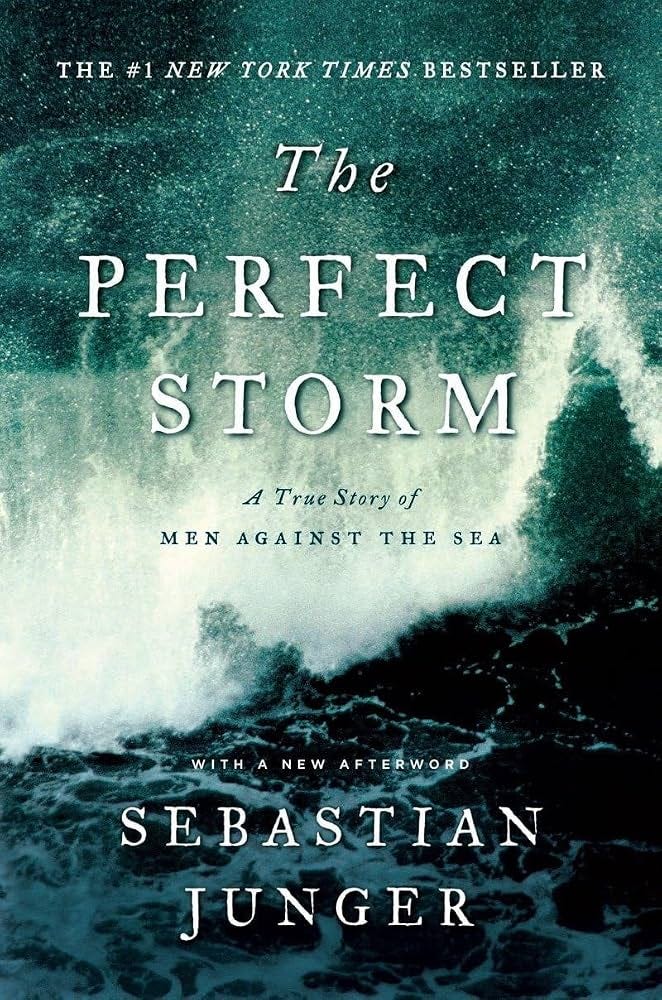
Yes, I am listing another shipwreck book…
The Perfect Storm is perhaps my all-time favorite movie (behind Jaws, of course), and despite George Clooney’s horrible attempt at a Boston accent, it perfectly captures the salty chill of seaside New England. The book, however, stands head and shoulders above the film. Going into far greater depth on the tragedy of the Andrea Gail, The Perfect Storm treats this nautical disaster with clinical objectivity, like in the section where Junger elucidates the biological process of drowning. It also sheds more light on the valiant efforts of the Coast Guard during the event, revealing just how brave you have to be to jump out of a helicopter into storm-swept seas.
While I am tempted to send you back to Sunny’s Bar for this read, any good Irish pub will help connect you to that Massachusetts vibe. Try The Long Hall or Swift Hibernian Lounge. Order a Guinness.
Mayflower by Nathaniel Philbrick
With Thanksgiving waiting in the wings, Mayflower is the number one read you should tackle this November. This is not the mind-numbing history book you might imagine; instead, it paints the experiences of the Pilgrims who arrived in Plymouth in 1620 with emotional precision, capturing just how brave—and in many ways, stupid—these colonists were. Philbrick is able to insert you directly into the fray of those first few decades of European colonization in the Northeast, bringing to life otherwise underwhelming historical events like the Mayflower Compact and King Philip’s War.
This book should be taken home for the holidays and enjoyed before you sit down to a heaping plate of turkey and stuffing, if only as a reminder that our nation’s forebears were lucky enough to dine on fresh venison and eels courtesy of the Wampanoag tribe on their first Thanksgiving.
Sorry, no eels for you.
Have a great week y’all finish strong,
