




Friends, after another long, gin-soaked summer, we have finally slid back into September, and I couldn’t be happier. I’ve always loved the shoulder months, especially the fall.
Winter presses inward from the sky, and you can smell the change—leaves and asphalt. Water.
In many ways, I see shifting into autumn as a homecoming—a return to routine and rest—and, in the spirit of turning the page, I want to introduce a new Outpost feature for our subscribers: The Ramble.
Once a month, I will drop in with a quick story or anecdote from the previous month, something that piqued my interest and, hopefully, yours. If you like it, great. If not? Too bad. It’s called the Ramble for a reason…
Chapter 1: Sharks Up Close
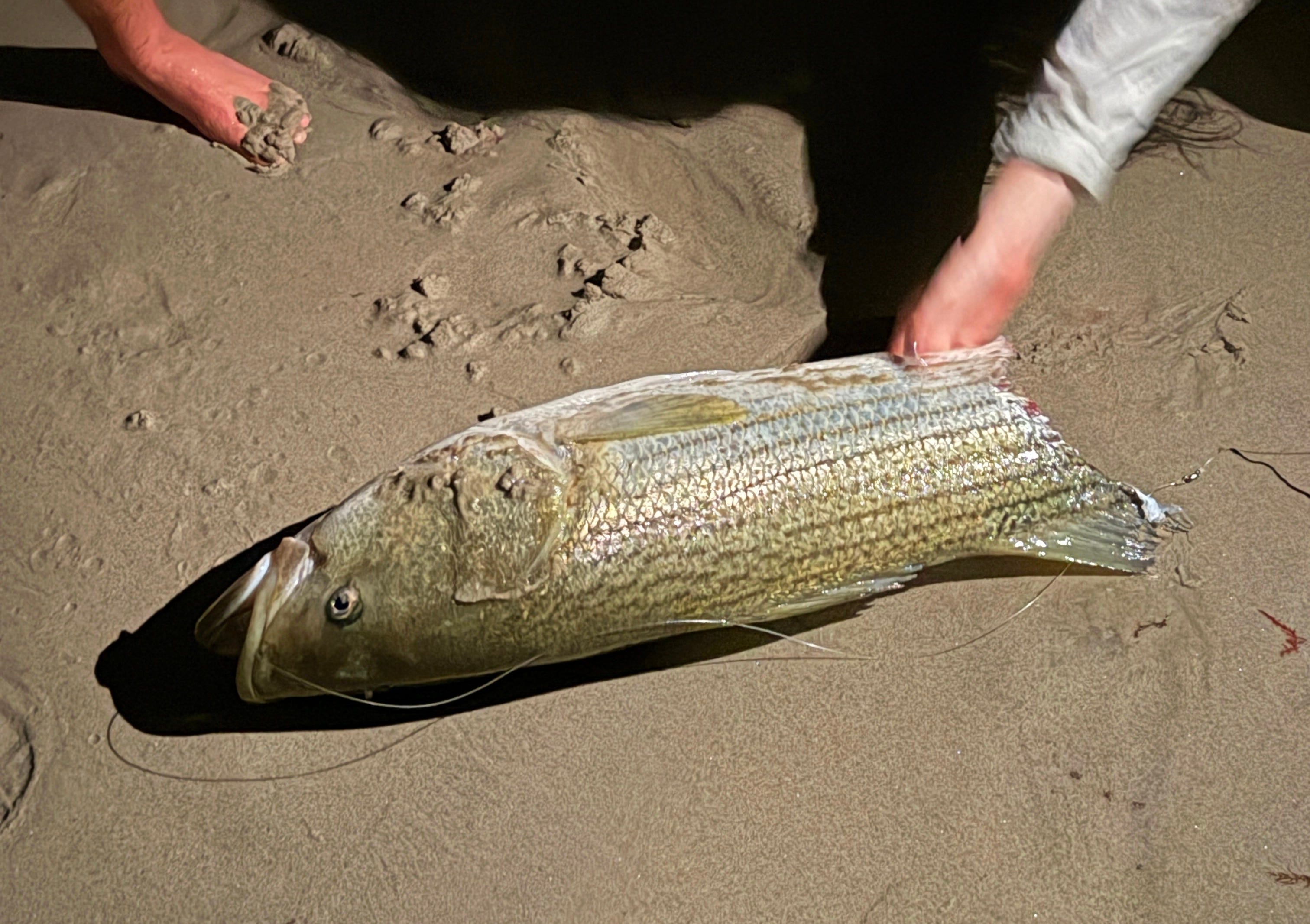
This summer was unusual for fishing—only big striped bass have lingered around much of Long Island Sound. In healthier years, summer beaches are typically clogged with schools of young, feisty bass that are eager to eat anything you place in front of their faces. They would fight like tuning forks—vibrating beneath the surface. It was a lot of fun. Now, the same beaches are patrolled by packs of older, smarter fish. Wolves, I call them. Slender but strong. Even cunning.
With so many opportunities to hook into bigger fish this season, many of the other fishermen I saw online took to bragging about their success, with some even lying about the size and quality of the bites they were experiencing. It’s a sin to lie, and an even bigger sin to lie about fishing. Still, that didn’t stop me from spending what fleeting time I had this summer in pursuit of a trophy fish of my own, and slipping away after dark ensured I would be alone.
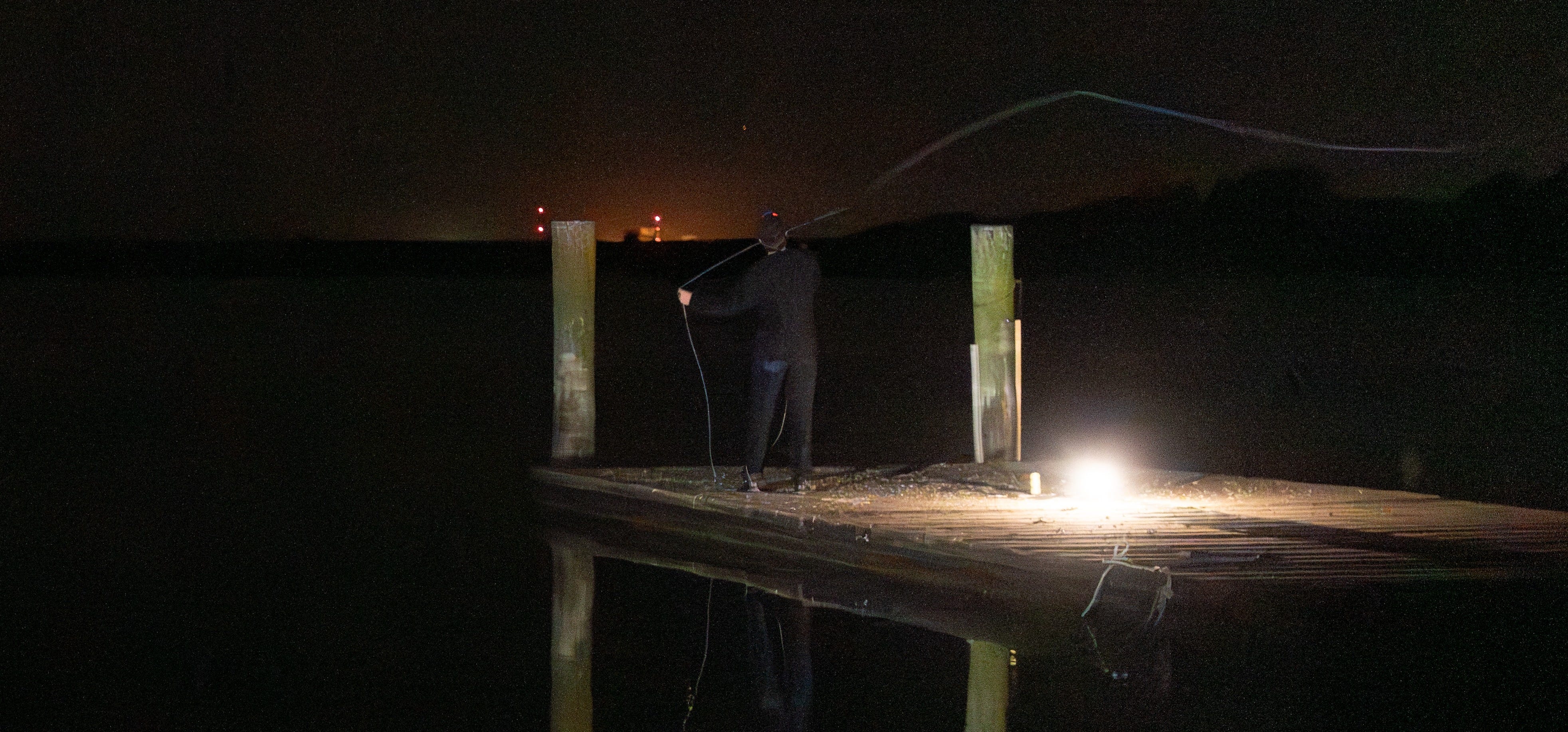
If you haven’t experienced it, midnight on an empty beach is otherworldly. The sky is somehow brighter than the land, solid and pinpricked with light before melting into the water at the horizon. With no moon, starlight is enough to see by, and you’d be surprised at how much is visible once your eyes adjust. If you’re lucky, you can witness bioluminescent flashes in the water, revealing dogfish, stripers, and bait. Or something else entirely…
One night this past August, the conditions lined up perfectly to encounter a memorable fish. There was a new moon, a light northwest breeze, and a rising tide that would peak at 1 a.m. When I got to the water just after nightfall, the wash shivered with bait. Silversides and sandeels, peanut bunker and snot bait. All the markers of late summer. As fall approaches, these schools huddle into tight clusters, moving closer and closer and joining other clusters until they stretch unbroken along the beaches. Here, they rest and feed before winter blows them out to sea.
With the stage set, I dug my feet into the sand and prepared to cast. When fishing a beach, I work the surf methodically—moving from left to right until I hit the boulders at the opposite end, then work my way back. In the dark, there is nothing to track—no line or fly to follow. Instead, you have to move in rhythm with your own body, using each muscle twitch and the weight of the rod in your hand as a guide.
After walking the beach twice without a hit, I retreated to where I left my shoes and opened a warm beer in frustration. It was just after 2 o’clock, and I was left scratching my head. I knew the fish were there. I could hear them. But for whatever reason, the bass were cautious this evening. Not enough current, maybe, or I had tied on the wrong fly.
After finishing what was left of my Coors Light, I decided to pare down my offering and tied on a sand eel fly before reentering the water. I had decided that whatever failure I was experiencing was due to a lack of casting distance, so I waded up to my waist to gain what felt like a necessary extra few feet.
With the tide just past its height, the waves died, and the beach was plunged into silence. All that was left was the distant moan of a lighthouse and the sound of my line as it whipped past my ear.
For another hour, I cast and walked, and cast and walked. Still, no fish, not even a sound of their presence.
Then, I saw it.
It was a few feet away from me—a dim green streak of water—something moving through the water and activating the bioluminescent phytoplankton. Alongside it, another green streak. The pair followed one another, moving in rhythm like dancers in circles. Stripers, I thought. Two large stripers. I cast in front of one, but no hit followed. I cast again after the next pass. Again, nothing. After watching them for a bit longer, my curiosity couldn’t take it, and I flipped on my headlamp. There, in the water, a few feet from my very bare legs, were two brown sharks—8 feet in length, with copper eyes and tan dorsal fins that sliced the water.
I would like to tell you that I exited the water gracefully that evening, but it’s a sin to lie about fishing.