

By William Kadison
At 5:15 a.m., I was more awake than I had any right to be. The usual early-morning fog had given way to excitement. We weren’t just going fishing. We were fishing the Derby.
I climbed out of the old bed at my parents’ house, grabbed my duffel bag, and hurried outside. At the bottom of the driveway, my father was already packing several large coolers with fresh ice. We loaded them into the back of his white Ford F-150 and, by 5:35, were headed for the dock.
As we passed Martha’s Vineyard Hospital, with Vineyard Haven Harbor on our left, my dad suddenly said, “Shit. I forgot my phone.” Then came the groan: a sound I had heard thousands of times before. I laughed and told him the delay wouldn’t matter.
A little after six, having doubled back for the phone, we reached the same dock where nearly every Derby fishing day of my life had begun. The sun rose over Oak Bluffs Harbor, revealing rows of center consoles and pleasure boats on their moorings. I looked toward the slips where my sister, Sarah, and I used to net silversides as children, the minnows that gave our first family boat its name.
That boat, a twenty-foot Jones Brothers skiff, was long gone. We untied a thirty-eight-foot Calvin Beal named Poco Loco and headed for the fishing grounds east of Nantucket.
As we passed Cape Poge Lighthouse, my father made eggs and cinnamon-raisin toast in the galley. We talked about the luxury of cooking breakfast underway and staying dry inside. The cold fall days on the Jones Brothers feel farther away in years than they do in memory. Sarah and I would sit on the deck and wrap ourselves around one of my father’s legs when the boat reached cruising speed, crying whenever the seas frightened us. I’d like to think we’re cooler now. (I’m not.)
We reached our spot later than we had hoped, but it didn’t take long. A reel screamed. The rod pulsed in my hands, and before I saw the fish, I knew what was on the other end: a false albacore.
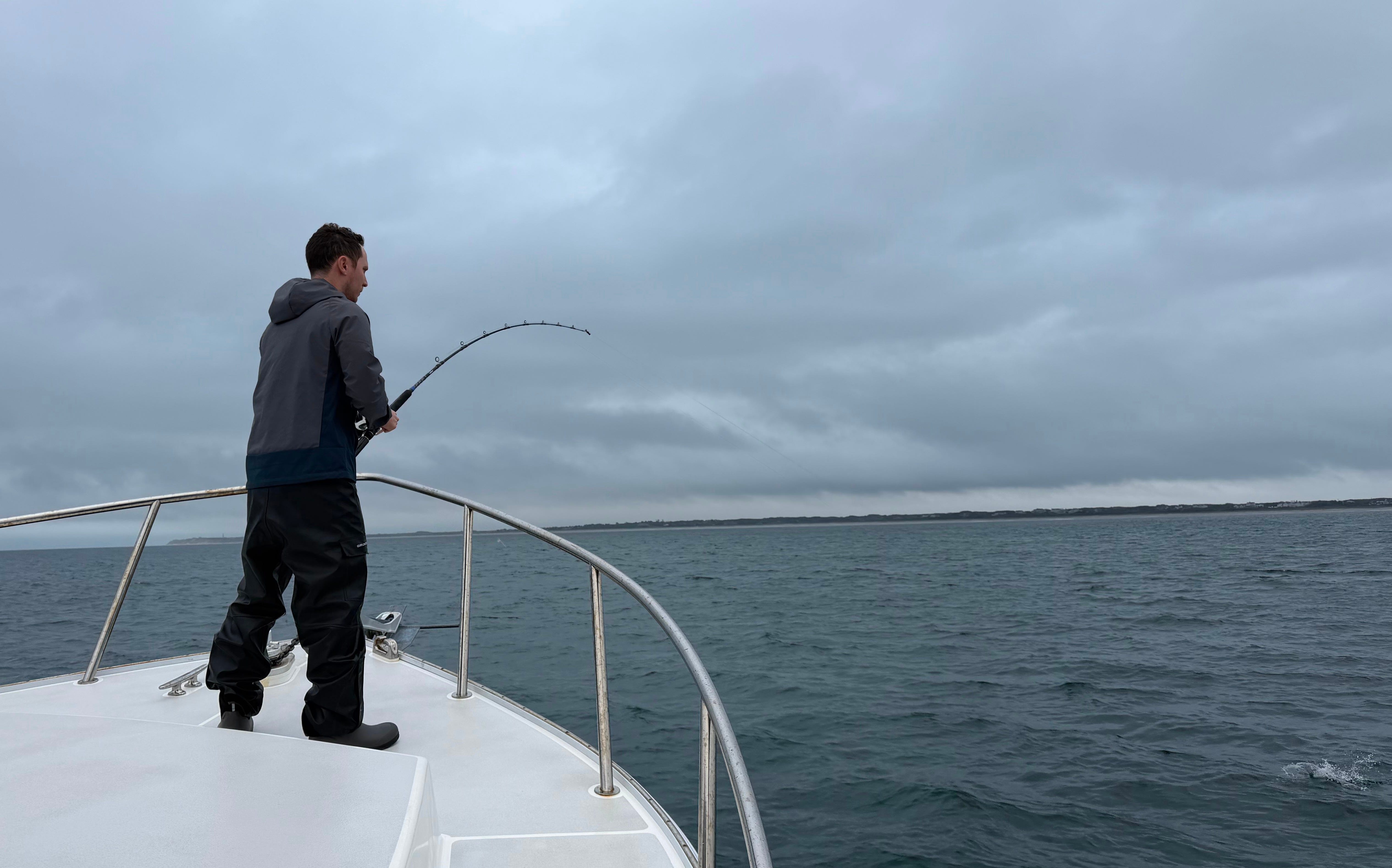
We found a school and spent the morning catching false albacore and bonito. None was “the big one,” but one fish didn’t survive the fight, so my father filleted it and cooked it in the cabin. Soon the smell drifted through the boat while we kept fishing.
Sarah, now fly-fishing from another boat with her partner, Zac, tied up alongside us. They climbed aboard for bonito sandwiches and an exchange of fishing reports and jokes.
As they pulled away, my dad said, “Bonito are such good eating fish, aren’t they? I can’t believe how good they are,” as if we had discovered them that morning. He wasn’t wrong. Smoked, grilled, baked. It doesn’t matter. They are a pleasure to catch and arguably even better to eat. As a child, I thought bonito looked friendly, especially next to the angry, yellow-eyed bluefish that shared the water with them.
By late afternoon, fish blood covered the deck and our clothes. Whenever the lines tangled or a fish came unbuttoned, my dad made the same aggrieved sound he had made after forgetting his phone.
Every time, I smiled.
At sunset, we turned toward Nantucket Harbor, where we planned to spend the night and get an earlier start the next morning. I reserved a table at Black-Eyed Susan’s on my phone. My dad pointed out that, not long ago, no reservation had been necessary.
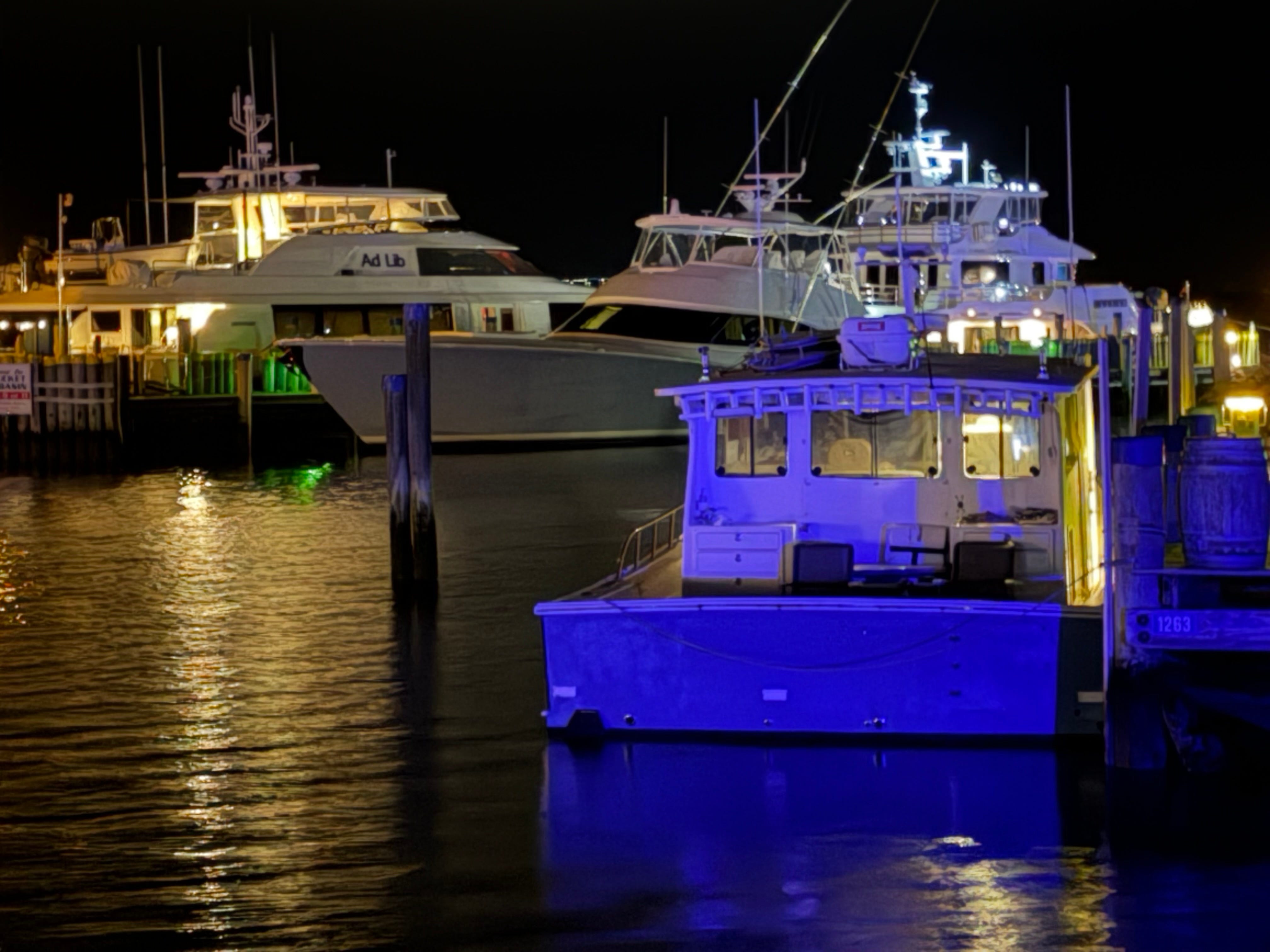
Inside the harbor, I stared at the boats. The Poco Loco, enormous next to the Jones Brothers of my childhood, looked like a dinghy beside the ninety-foot custom sport-fishing boats in Nantucket Boat Basin.
Dinner was excellent. Black-Eyed Susan’s sat a little off the beaten path and offered only three seatings a night. The patio was full of people who seemed to know one another and the staff. My dad remembered when he could walk in and sit at the counter. We laughed about what dinner, and everything else on Nantucket, now cost.
We slept aboard and woke to rain pattering on the cabin. “It’s gonna pass quickly,” my father said, studying the radar. We left early and reached our first spot just before six.
The fish were unimpressed by our punctuality. My dad made the same breakfast, eggs and cinnamon-raisin toast, and the bite improved as the morning went on. Eventually, I caught a false albacore and a bonito that seemed worth weighing.
“That might get you a daily prize,” my father said.
Lunch was bonito again, this time mixed with mayonnaise, hot sauce, and celery. We tossed sandwiches to Sarah and Zac, then made a pass by my father’s friend Joe and threw one onto his boat. For a while, we operated a small bonito-salad delivery service. An oven aboard makes you popular offshore.
By afternoon, it was clear that the Derby winner was not coming over our rail. I didn’t feel much pressure to find it. That morning, we had heard that someone had caught a Derby-leading false albacore the day before, not only that, but the fish was also a new state record. As a child, I had dreamed of breaking the previous mark, set by Don MacGillivray, a well-known Derby character. I had studied photographs of his fish, trying to will one slightly larger onto my own line. Now, hearing that the record had fallen, I found myself thinking less about the fish than about the people on the boat: the day they must have had together and the story they would tell about it.
Hours later, we returned to the dock, loaded the cooler, and drove to the weigh station in Edgartown.
The small shack holds more memories for me than almost any other building. As a child, I had a spot behind the counter where the weighmaster let me stand and watch the fish come across the scale. I never wanted to leave.
This time, we arrived with about fifteen minutes to spare. Spectators complimented my fish, and I accepted the praise awkwardly. One man asked, “Which one is the bonito?”
“Eat this one,” I told him, pointing. “Don’t eat the albacore.”
He laughed.
As we cleaned the cooler on the dock, a boy of about eight asked, “Have you seen the seal here yet?”
Right then, a large seal rolled onto its back against the black surface of the harbor. I pointed and showed him.
“Mom, look! He’s grown since last year!” the boy yelled.
My dad and I smiled and walked back to the truck.
When we reached home, my father stepped through the front door, sighed, and said, “I wish I was younger.” I wished the same thing.
In my childhood bedroom, I looked at the old Derby plaques and mounted fish on the walls. A photograph of Tom Brady hung among them. The oldest plaque read: 2001, First Place, Mini Junior False Albacore. The Red Sox had not yet won the World Series. Brady had not yet won his first Super Bowl. We had been doing this a long time.
When I was a child, I thought the Derby was a fishing tournament. I still want to win, badly, but the competition now feels almost beside the point. For nearly thirty years, the Derby has given my family a reason to come back to the same dock, the same water, and the same routines. I’m mostly just grateful that we’re still able to do it together. I hope we get to keep doing it for a long time.
