



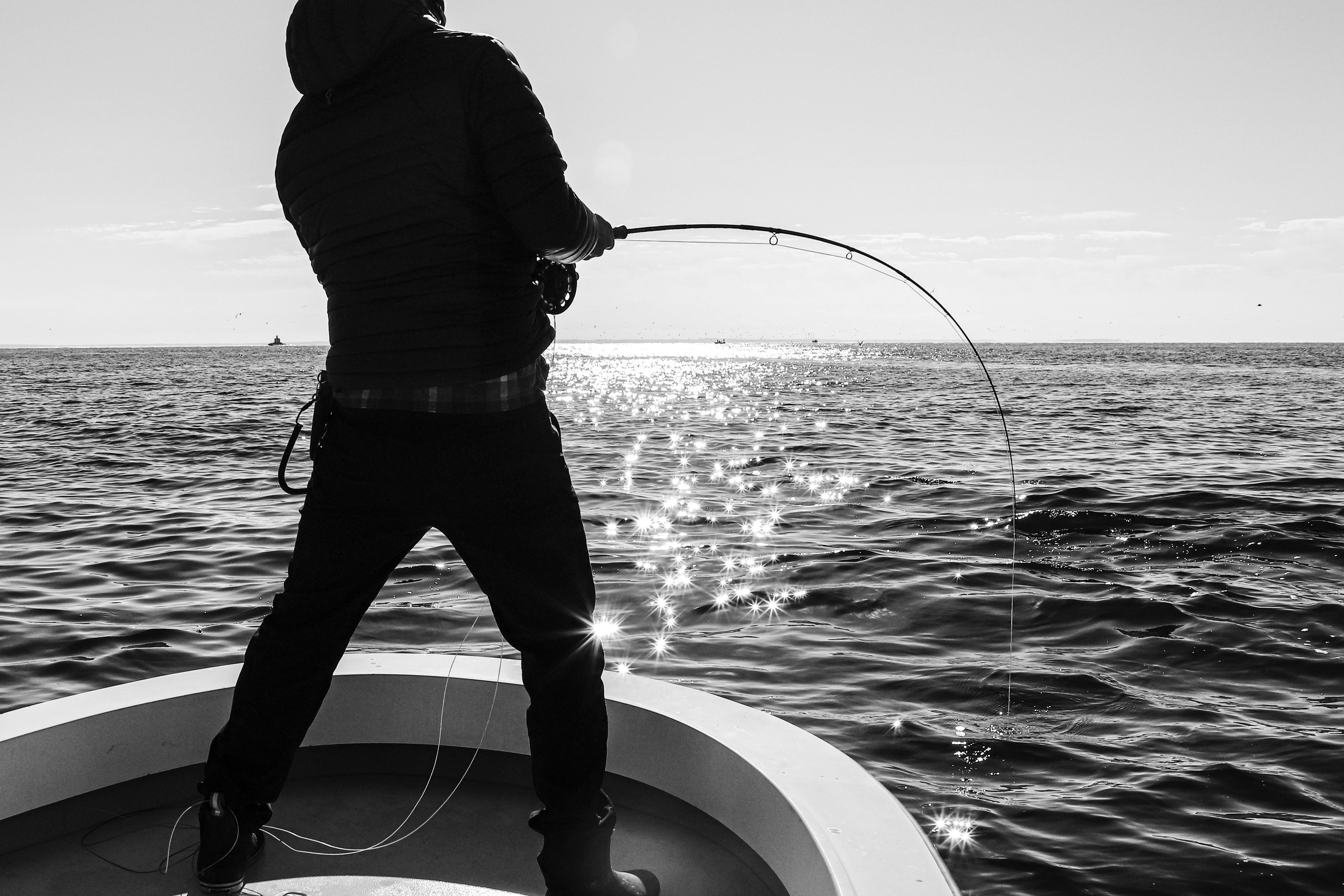
By Capt. Pat Huban
I was at a party recently where a friend of mine asked how my charter business was going, and I realized that most people associate “charter fishing” with a party boat or some type of “deep sea” trip. There’s nothing inherently wrong with these types of charters, and I’ve even been on a few.
The difference between what I do and these types of trips is that party boats tend to feel like adult field trips—an enjoyable day doing something that most people won’t ever do again. A rod is handed to them, either baited and rigged or with a fish already securely hooked so they can reel it in. It’s a great way to spend some time on the water for someone interested.
But it’s not what I do
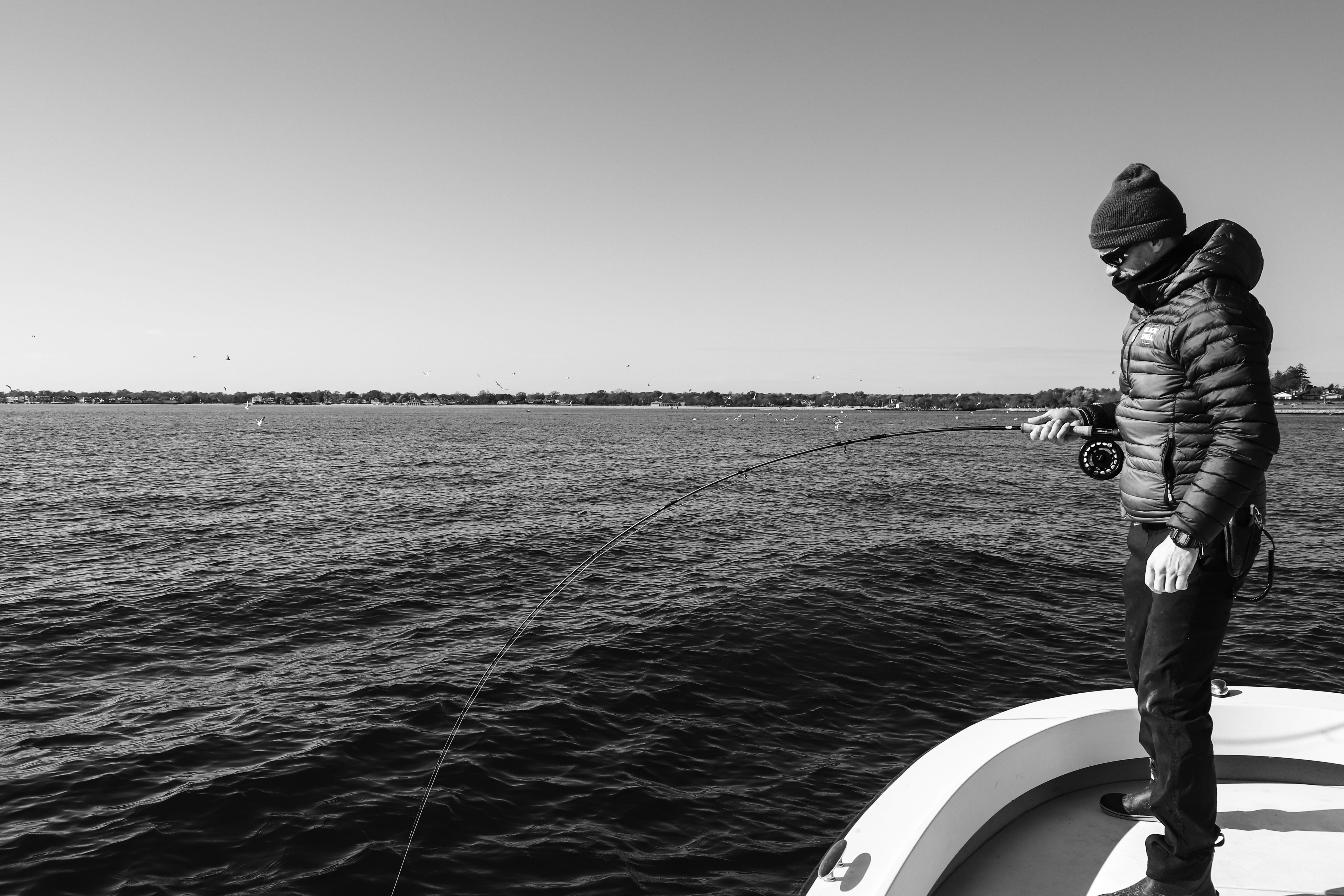
I explained to my friend that I do saltwater fly-fishing charters and only take two anglers at a time. Confusion followed; however, this guy was an avid bow hunter, and I saw the opportunity to make a connection.
He immediately understood that regardless of what I can do for my clients, the moment when the fish is in front of them is entirely their moment. I can show them the fish, position the boat, give them instructions, but the client has to cast the fly and manipulate it the right way. I can’t do that for them, nor would I.
Buck fever is defined as an intense rush of nervousness, excitement, and adrenaline that a hunter feels when they see or get close to a deer or other game animal—not always a concept associated with fishing. My job is to give my clients the opportunity to conquer that moment. Whether it’s casting to a pod of striped bass crashing through the surface, or a slowly cruising tarpon, proficiency and composure on the bow comes only from time and repetition. Just like hiking through Western mountains for the chance to see an elk, saltwater fly fishing is a journey. It doesn’t conclude after one trip. The moment one seeks isn’t guaranteed. This client/guide relationship and my business was then easily understood by the seasoned hunter.
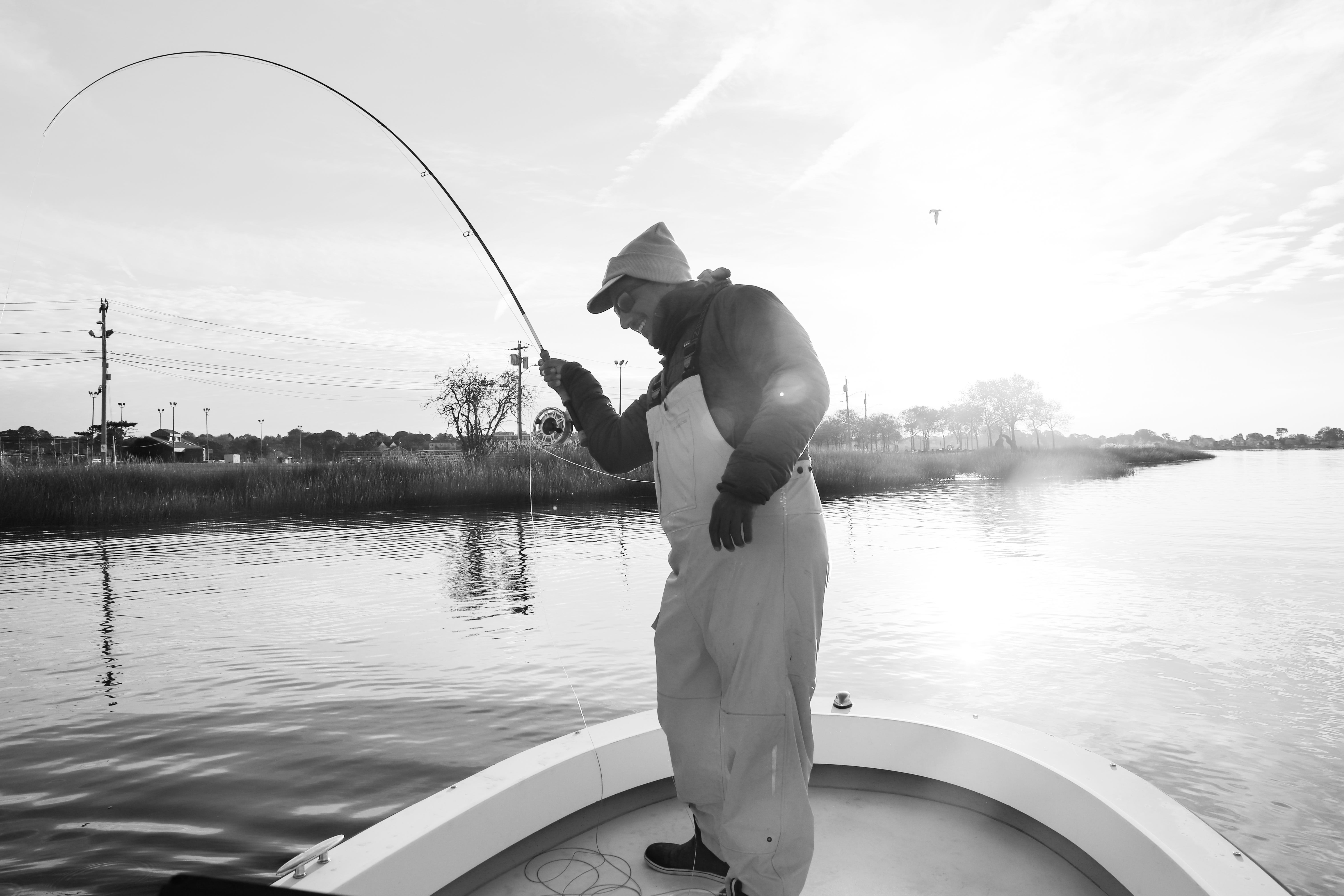
Still, not everyone has a similar frame of reference, so what’s the best way to explain this to someone who has never held a fly rod in the salt? A veteran guide put it this way:
“Clients are paying for an opportunity, and along with it, they are also paying for the effort, expense, and experience that the guide has accumulated. What they do with that is up to them.”
Ultimately, my burden is managing the infinite variables that stand in the way of that opportunity—whether it’s my boat, gear, equipment, flies, wind, tide, weather, or even my own personal life and family. It’s entirely possible that all those variables make your one chosen day, well, not optimal. Saltwater fly fishing is a marathon, not a sprint.
I’ll leave it at this: If you are thinking about hiring a saltwater guide, keep in mind your own personal journey in saltwater fly fishing, and try to learn something from that experience besides just pulling in a fish. Remember, you and the guide are a team. Mutual respect and working together are critical.
If you are a saltwater guide, or want to be, remember, it’s not about you. Don’t expect any accolades, credit, or adulation. Most of your work will go unseen, and your only job is to do everything you can to ensure your client has their own “buck fever” moment.
I provide the journey to allow my clients to see the fishery during different conditions and seasons, overlaid with variables, and create the time and repetition needed for them to experience growth. That is what I do.
For more information or to book a trip with Pat Huban, check out his website.